
Verse of the day · Sunday 11 October
“Whatever is born will die, and whatever dies will be born again. Don't grieve over what cannot be avoided.”
Bhagavad Gita 2.27 · Who you really are

The Bhagavad Gita · in plain English
Krishna’s answers, so simple a child could follow.Krishna’s answers to fear, purpose and peace — explained so simply a child could follow. Free.
Verse of the day · Sunday 11 October
“Whatever is born will die, and whatever dies will be born again. Don't grieve over what cannot be avoided.”
Bhagavad Gita 2.27 · Who you really are
Tap to watch · like stories on your phone
Swipe up, feel better
Why people fall in love with GyanGita
Free forever · No sign-up · No ads · All 700 verses

Tap the feeling closest to yours for the verses written for exactly this moment.
A small daily ritual
Hold a question in your heart. Then tap the lotus.
3 · The wisdom
Underneath your body, moods and memories is awareness itself — the part of you that notices everything else. The Gita says this deepest self was never born and never dies. Fear loosens its grip when you know what can’t be harmed.
Read Gita 2.20 →You control your effort, never the result. Pour yourself fully into what you do, then let go of the scoreboard. Anxiety lives in the gap between effort and outcome — this closes it.
Read Gita 2.47 →Success and failure, praise and blame will keep coming. A steady mind that doesn’t swing wildly with them isn’t cold — it’s free. The Gita calls this evenness “yoga”.
Read Gita 2.48 →Three easy ways in
4 · The journey
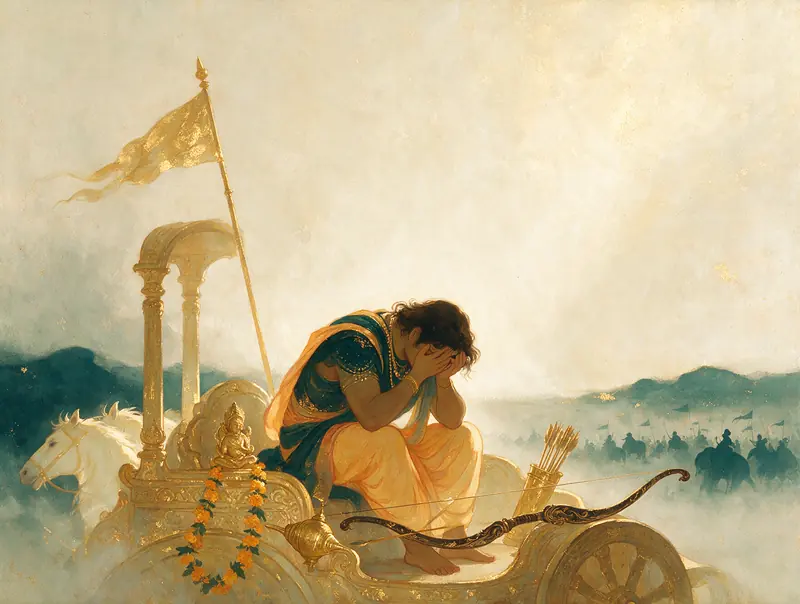
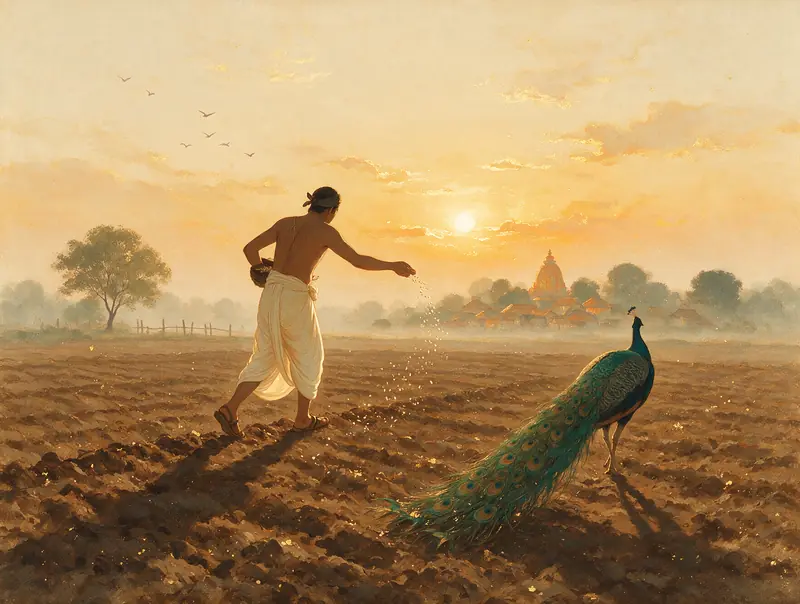
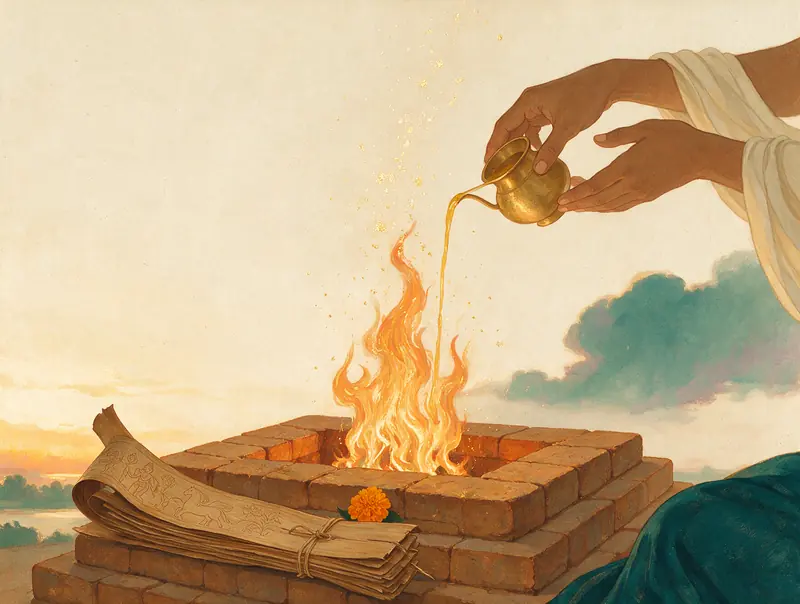
Each chapter is one step of Arjuna’s turnaround. Swipe through — or start at the beginning.
 01
 02
 03
 04
 05
 06
 07
 08

5 · Lines to live by
6 · Keep it close
See it every time you reach for your phone. Pick a line, pick a painting — dawn on the Yamuna, a lamp in the dark, a lotus at sunrise — and save a free, full-resolution wallpaper.
Make my wallpaper7 · You’re in good company
“In the morning I bathe my intellect in the stupendous and cosmogonal philosophy of the Bhagvat Geeta.”
“When doubts haunt me, when disappointments stare me in the face… I turn to the Bhagavad Gita and find a verse to comfort me.”
“One of the clearest and most comprehensive summaries of the Perennial Philosophy ever to have been made.”
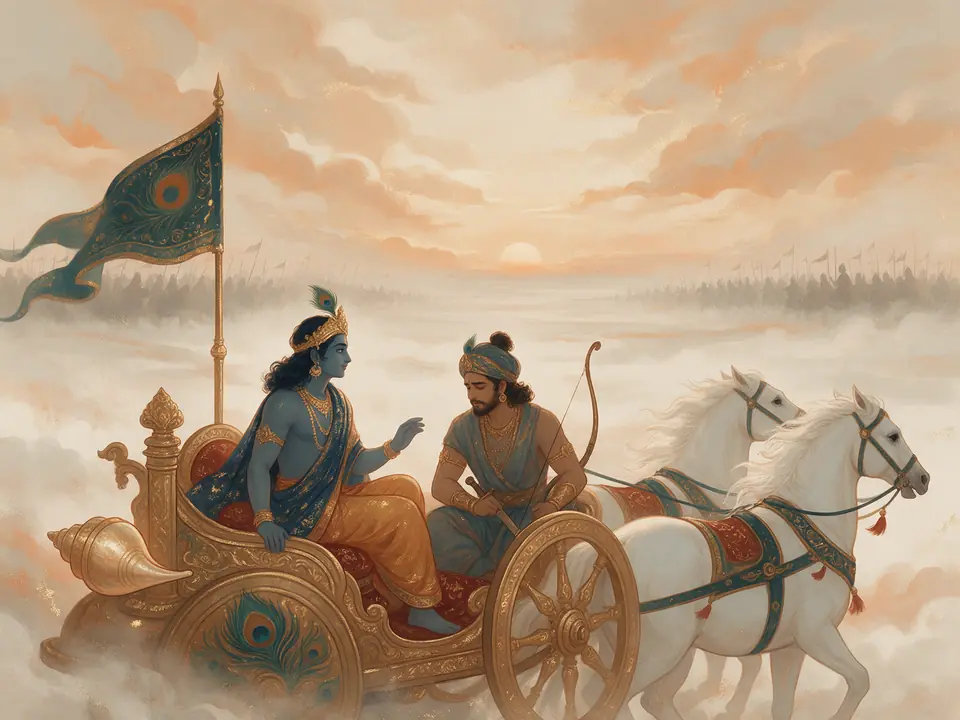
The Bhagavad Gita (“Song of the Divine”) is a 700-verse conversation from the Indian epic Mahabharata, more than 2,000 years old. On the eve of a war, the warrior Arjuna is paralysed by doubt, and his friend Krishna guides him through fear, duty, death, the mind and love. It is one of the most influential books of spiritual philosophy ever written.
No. People of every faith and none read the Gita for its psychology and calm. Every verse here has a plain-English explanation written for modern readers, alongside the Sanskrit, a literal translation, Hindi and traditional commentaries. The five-minute guide gives you all the background you need.
Completely free, with no signup and no ads. Read all 18 chapters, find verses for how you feel, save favourites, make wallpapers and share 108 of Krishna’s best lines.
Verse 2.47: “You have a right to your work — never to its results.” It is Krishna’s answer to anxiety about outcomes, and the heart of the idea called karma yoga. You will find it, and 107 more, on our Gita quotes page.
Five minutes today. That’s all it takes to see why people have kept this book close for two thousand years.